
 WHAT WE’VE DONE
Unique & Powerful
You have a shorter attention span than a goldfish! Brand messaging is now more important than ever.
Brand Messaging, Marketing Strategy
Yes, it might sound shocking, but the average consumer now only has about 8 seconds of attention span to your brand messaging (1 second less than the average attention span of a goldfish), before they move on to something else or lose interest altogether – and that figure is already a year old.
This makes sense when you see that the average consumer receives around 5000 brand exposures every day, with about 360 of those being paid advertisements. Less than half of those are even recalled, with only about 12 of them ever making an actual impression.
Consumers are bombarded by brand messages from a plethora of mediums all the time, whether that’s on the radio on your ride to work every day, billboards or street pole advertising, in your favourite magazine you read over lunch, on your social media or visiting mobisites on your phone, whilst searching the internet on your computer or laptop, on TV whilst you’re eating dinner, or just about everywhere you look.
Thanks to modern tools such as PVR, iPods and the internet (including the emergence of internet TV and internet radio), consumers have also taken a lot more control of which media they want to watch or listen to and when, as much as we as marketers try to ensure exposure.
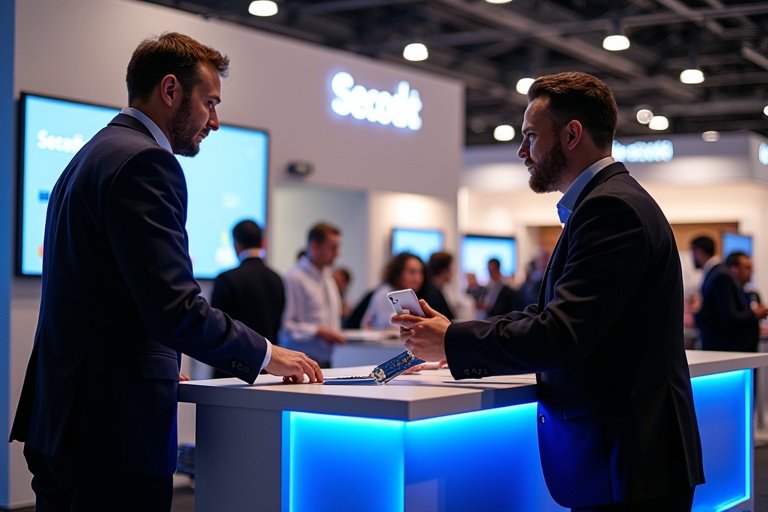
Beyond that, even when you have a captive audience at an event, activation or exhibition, their levels of concentration and openness to receiving the message does not guarantee exposure, acceptance and adoption. The consumer still has to be captured by your message instantly, as is proven with website visitor stats, where the average visitor only spends less than a minute on a particular site, with more than 55% of visitors spending less than 15 seconds before clicking on to something else.
So in this digital age we have to really look at how we deliver brand messages that are bound to get noticed and are sure to grab attention that in turn leads to action. We have to be different and we have to be fresh and exciting with new ways of speaking to our audience.
Innovation as an example, is a good way to demand attention. By utilising technologies that consumers are not familiar with or generally exposed to, but are very visual and engaging, one stands out of the clutter of messages we see on the traditional mediums every day. Examples of these are elements such as holographics, augmented reality, 4D, the current buzz surrounding virtual reality, or even gesture recognition through technologies such as Leap Motion.
One doesn’t always need to use technology, as it needs to fit the product, message and brand style of communication, but most importantly you have to remember that technology is just a delivery mechanism for the message. It’s the message that’s important. When we get to how best we can deliver that message, technology becomes a consideration. Technology is a very easy way to capture interest, but can also become an extremely costly exercise.
At the end of the day, the message has to be impactful, exciting, visual, and easy to understand, with little effort to comprehension. Consumers no longer read, as research has seen, but rather glance or skim over pieces of content. They prefer to engage with visuals or motion video to tell the story in the quickest and easiest way. This has meant that in the digital age, content is the all-important King, as they would say. In whatever we do, multimedia is playing a vital role in getting messages across.
Traditional marketing is changing, and those that believe it is still for demographic use (i.e. traditional marketing methods for older audiences), fail to realise that when only 10% of our market are yet to own a mobile phone, made up strongly of the poorer consumers rather than the more mature consumers, means that most of our consumers today, no matter their demographic, are living and engaged in the digital age.
So what do we modern marketers do?
Given the plethora of communication mediums, we firstly have the opportunity, but are also more inclined, to pick mediums that speak to our correct demographic more directly than generic channels. Furthermore, there is a growing importance to find new mediums or unusual mediums of that demographic, to ensure we stay out of the clutter, and own more mind space in that channel. This has shown an increase in the need for disruptive marketing services and unusual non-traditional media offerings.
Given the low consumer threshold and attention span, we also need to rely heavily on creativity that speaks to our demographic requirement by using visual mediums that can tell the story in a very visible way, in only a matter of seconds. Stay away from long-winded, complicated messages, and rather opt for a more visual approach that can be communicated in as little as 15-30 seconds.
For an interesting article on how to deliver a message in these modern times, go and check out B2B Content Storytelling.
